File your Fuel Excise Taxes quickly and securely with Simple720, the IRS-authorized Form 720 e-file provider.
- No software to install
- Advanced data protection
- No long-term commitments


What Is Fuel Excise Tax?
- Fuel excise tax is a federal tax imposed under Internal Revenue Code Section 4081 on certain fuels, such as gasoline, diesel, kerosene, and other taxable fuels, when they are removed for consumption, entered into the United States, sold, or used in a taxable manner.
- It is a specific (per unit) tax applied to measurable quantities of fuel (often per gallon or equivalent) rather than based on price, and the liability generally arises during fuel distribution or use by manufacturers, importers, or distributors.
Who Pays Fuel Excise Tax?
Fuel excise tax is generally paid by the person or business liable for the taxable fuel transaction, such as a terminal operator, position holder, importer, seller, or certain fuel users, depending on the type of fuel and taxable event. These liabilities are generally reported and paid using Form 720, Quarterly Federal Excise Tax Return .
Fuel Excise Tax Requirements
| Category | Details |
|---|---|
| IRS Number | Varies as per the sub category selected |
| Reporting Section | Part 1 (Fuel Taxes) |
| Filing Frequency | Form 720 – Quarterly |
| Tax Rate | Varies as per the sub category selected |
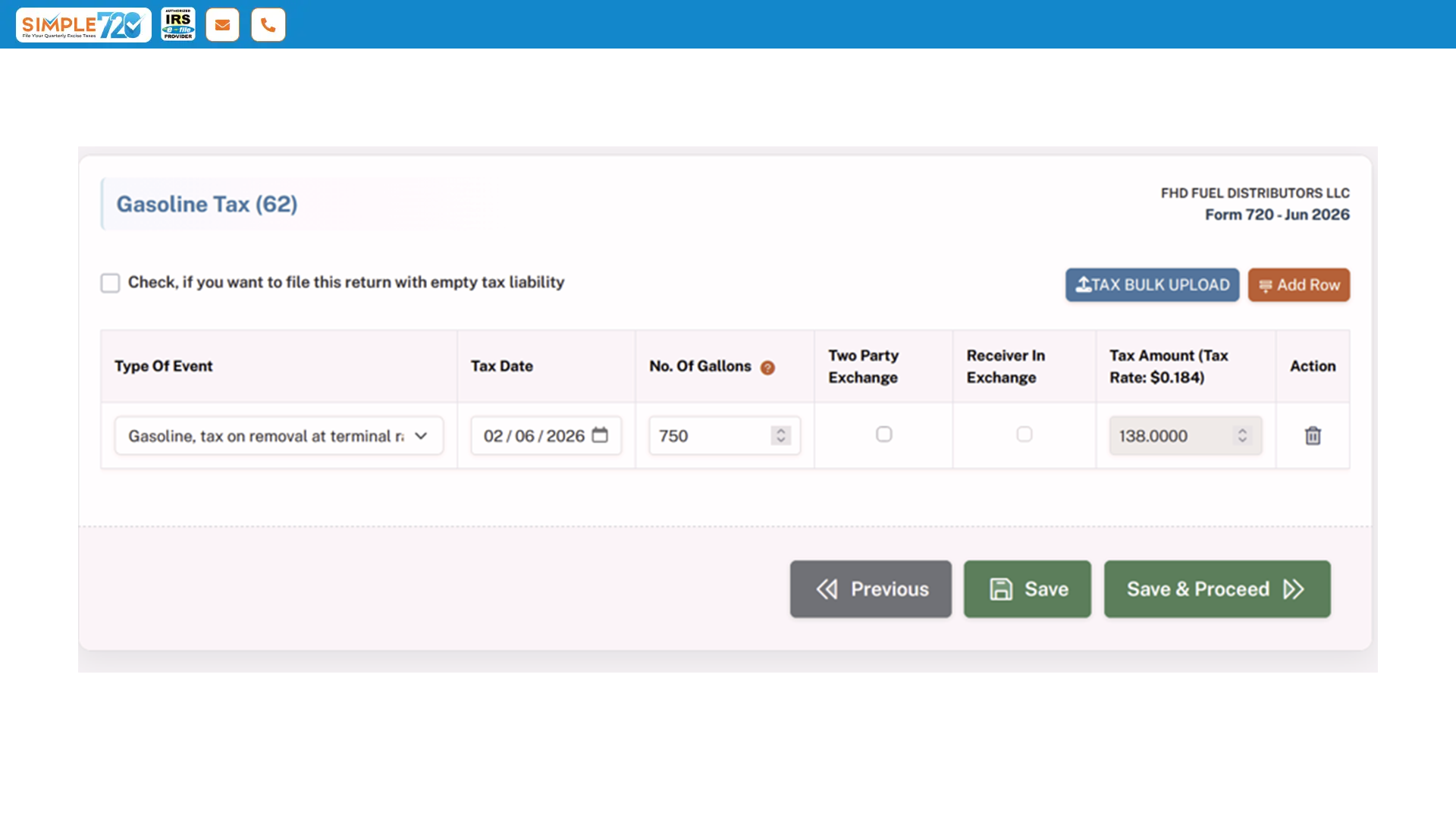
| Tax Calculation Formula | Number of gallons × Tax rate |
| Details Required for Calculating the Tax Amount | Quantity in gallons, Fuel name and the corresponding tax rate. |
Fuel Excise Tax Due Dates and Penalties
| Quarter | Tax Period Covered | Form 720 Due Date |
|---|---|---|
| Q1 | January 1 – March 31 | April 30 |
| Q2 | April 1 – June 30 | July 31 |
| Q3 | July 1 – September 30 | October 31 |
| Q4 | October 1 – December 31 | January 31 (following year) |
If you fail to file Form 720 for your Fuel Excise Tax by the applicable due date, the IRS may impose penalties and interest . Common penalties include:

Generally 5% of the unpaid tax for each month or part of a month the return is late, up to 25%.

Generally 0.5% of the unpaid tax for each month or part of a month , up to 25%.

If taxes have not been paid, interest can accumulate from the date payment was due until the tax liability has been satisfied.

Further penalties may arise where federal tax deposits have been untimely, understated, or improperly deposited.
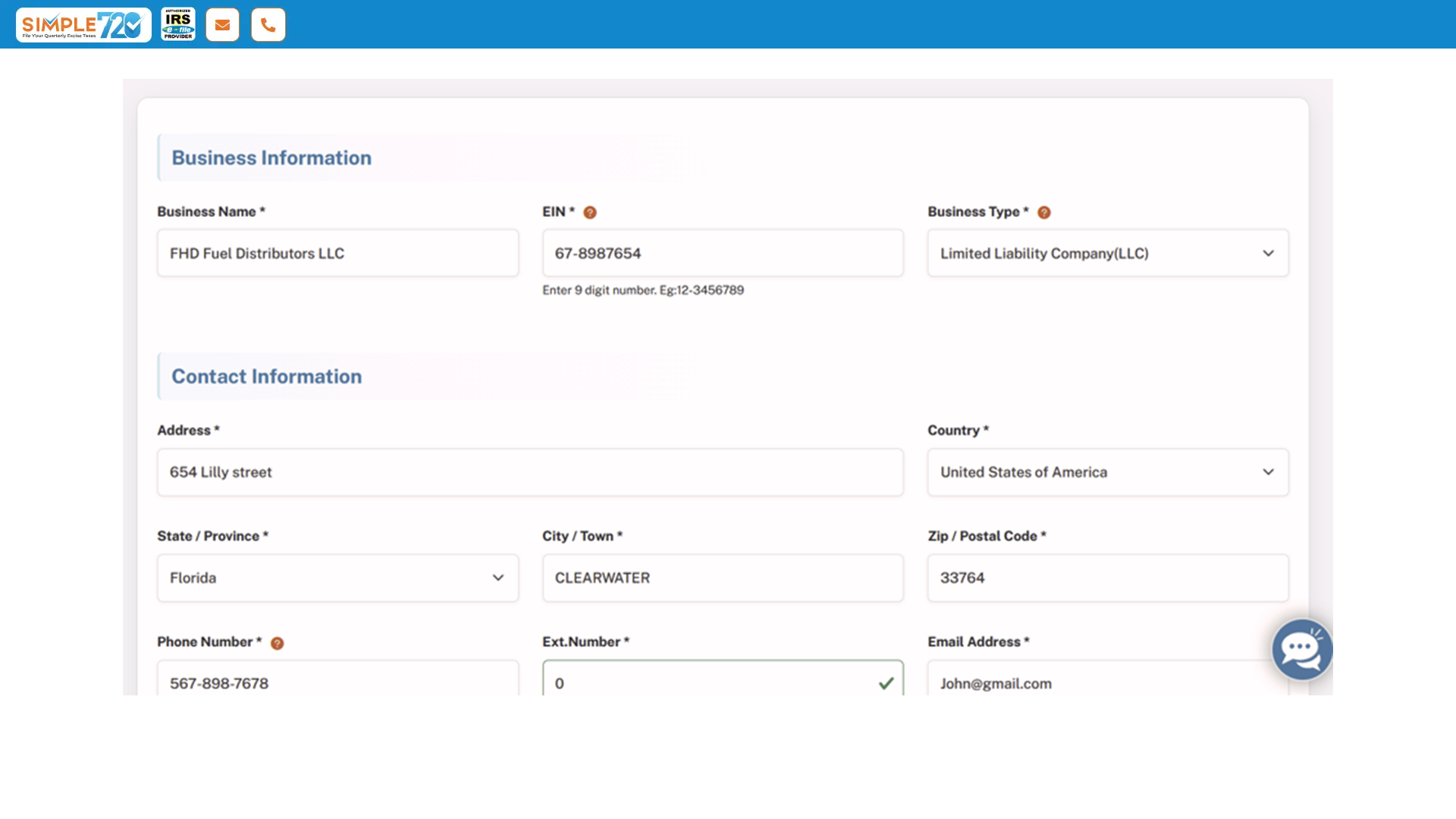
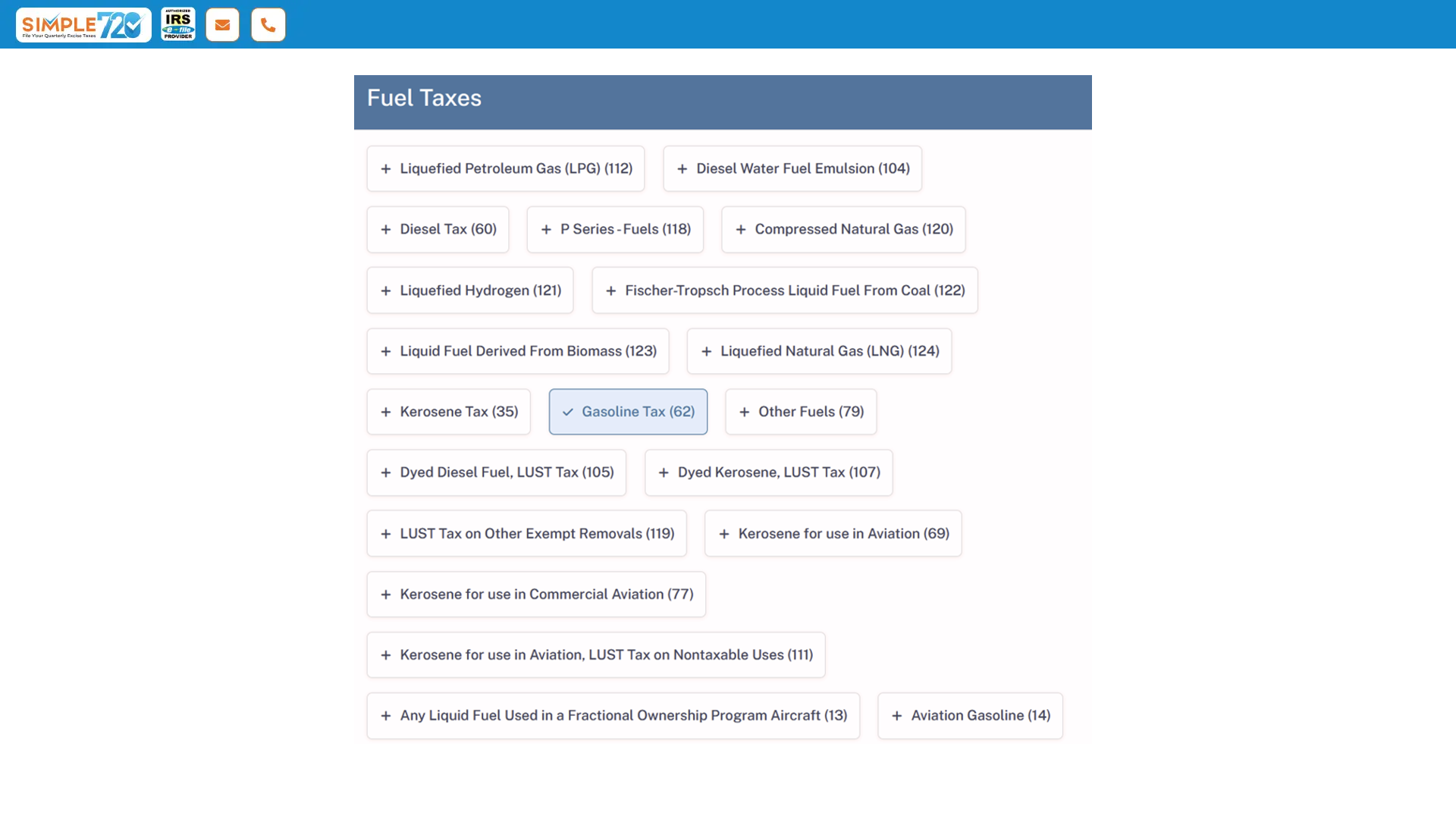
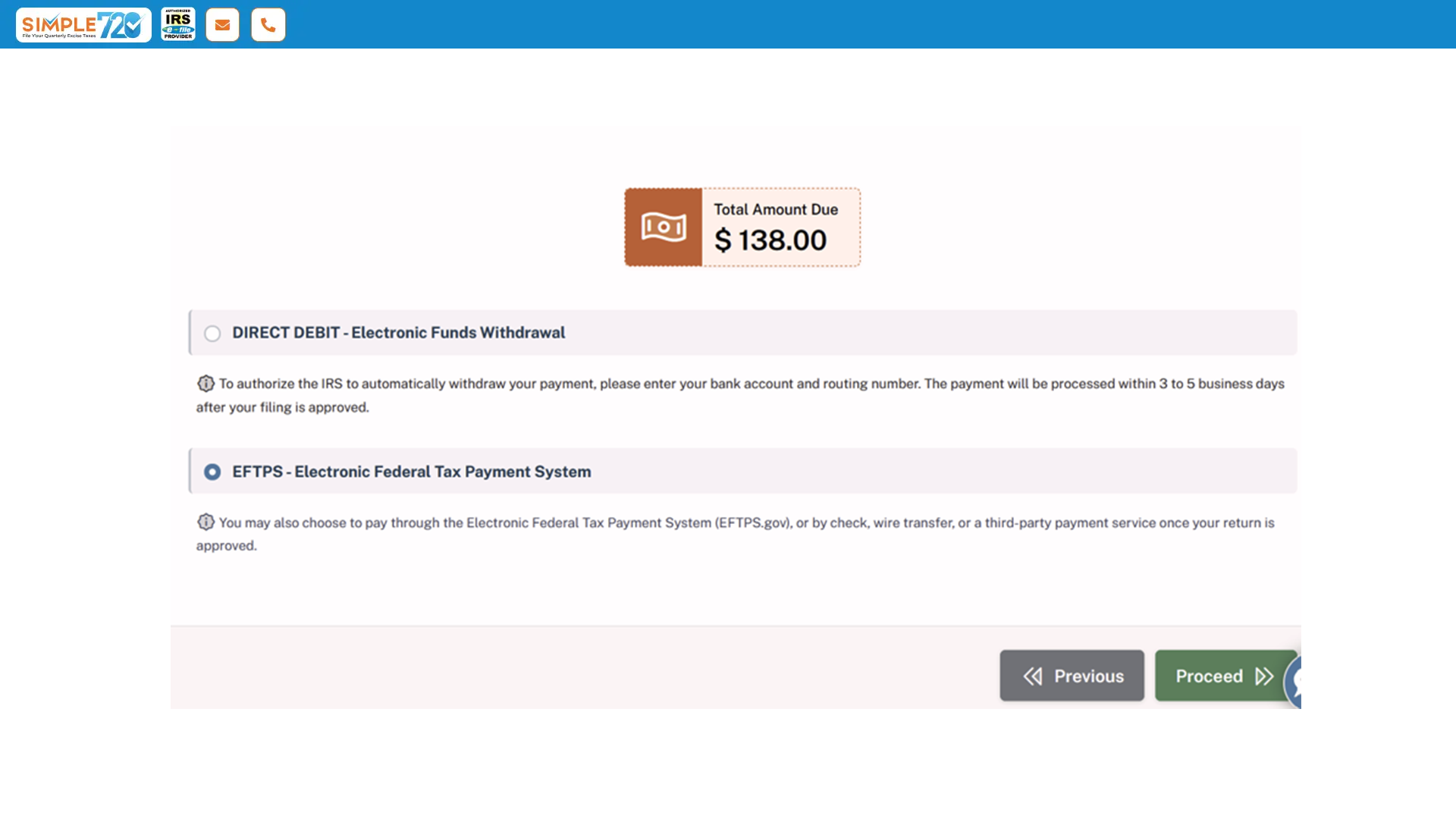
How to file your Fuel Excise Tax online with Simple720
(easy 4 Steps)
details
the Tax category
Tax details
your payment
Why Choose Simple720 for Filing Your Fuel Excise Tax?


Simple720 vs Other Providers vs Manual Filing
| Filing Features | Simple720 | Other Providers | Paper Filing |
|---|---|---|---|
| Software Download | Not required | May be required | Not applicable |
| License | No license | May require license | Not applicable |
| Contract | No contract | May require contract | Not applicable |
| Cost | Affordable pricing | Often higher cost | Moderate |
| Filing Speed | Fast online filing | Varies by provider | Slower filing |
| Ease of Use | Simple guided process | Platform dependent | Complicated manual process |
| Efficiency | Highly efficient | Varies by provider | Less efficient |
| Tax Calculation | Automatic calculation | Provider dependent | Manual calculation |
| Support | Dedicated support | Limited support | No support |
| Overall Experience | Fast and simple | Varies by provider | More manual effort |

Quick and Error-Free Filing
Filing multiple fuel excise tax categories used to take hours,
but Simple720 helped us complete everything quickly and accurately.
Reliable and Easy to Use
Simple720 made quarterly Form 720 filings for our diesel and LPG
taxes simple — even with different IRS tax numbers involved.
Excellent Support and Clarity
The guided workflow and support team helped us understand credits
and refunds, so we filed confidently and without stress.
Frequently Asked Questions
Curious how Fuel Excise Tax filing
works on Simple720?
Our fuel tax specialists are ready to walk you through
the entire process.
Reserve your free live demo today and see how easy Form 720
filing can be.