High Pressure vs Low Pressure Tanning Beds: Key Differences
Tanning beds in salons provide a cosmetic tan to the skin by exposing it to ultraviolet (UV) radiation. In salons, one can generally find different tanning equipment options including low, pressure and high pressure beds, stand up tanning booths, lay down Tanning Beds, and hybrid tanning systems that use different lamp technologies.
Each type differs in the level of UV exposure, duration of sessions, tanning outcomes, and the cost of running. One of the most popular and frequently compared choices among the options is the use of high pressure and low pressure tanning beds.
What Is a High Pressure Tanning Bed?
What Is a Low Pressure Tanning Bed?
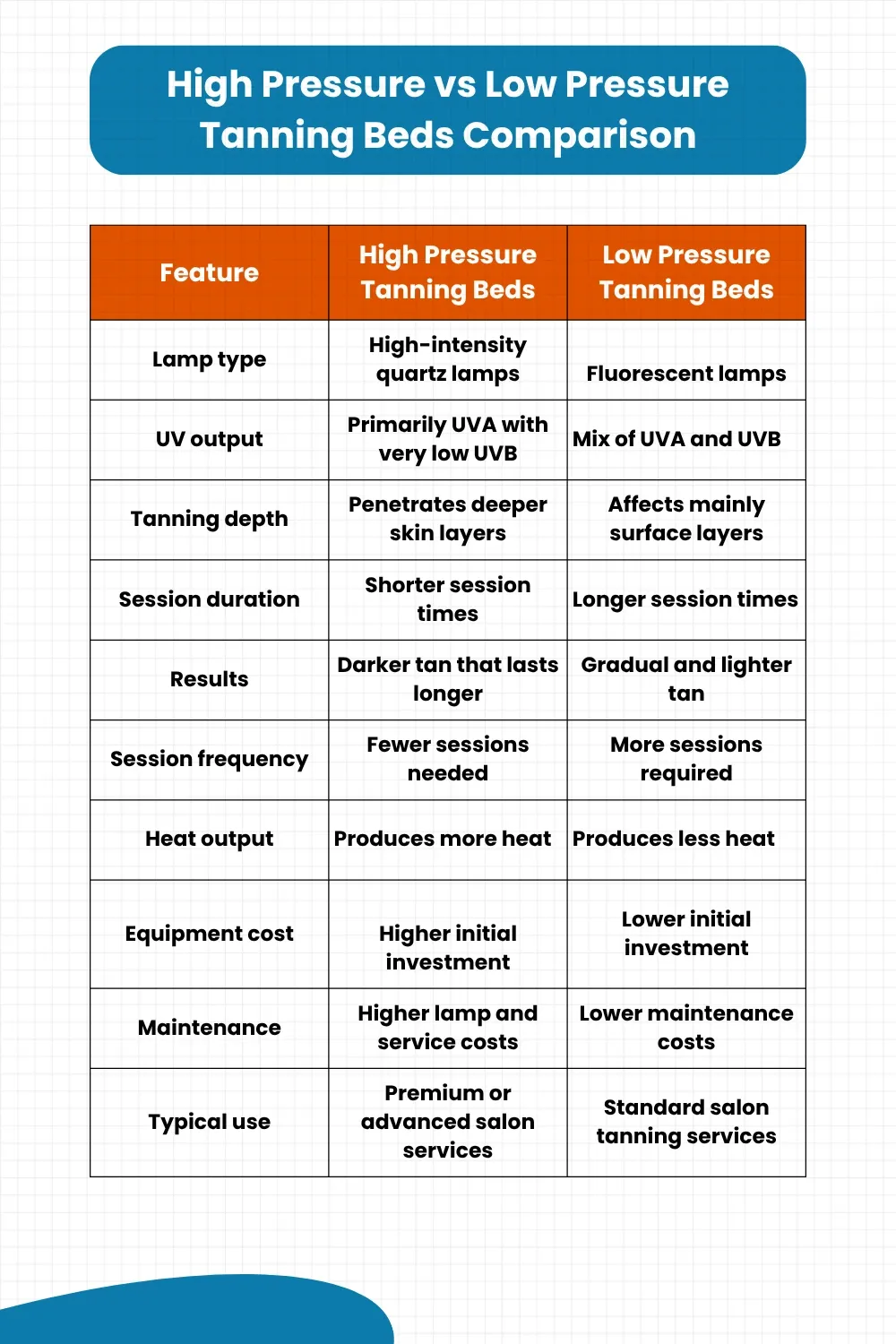
High Pressure vs Low Pressure Tanning Beds Comparison
The IRS Requires Online Filing for Tanning Excise Tax - Stay Compliant.
File in minutes with our secure, IRS-authorized portal!
Important Health Note
Overall, tanning beds are not safe for health. Being exposed to UV radiation increases the risk of skin damage, premature aging, and eye injury. The risk of skin cancer, including melanoma, is very high when using high pressure tanning beds due to extreme UVA exposure.
Read our blog on the comparison of Standup Vs Laydown Tanning beds.
Conclusion
No matter which type of tanning bed your salon offers, high pressure or low pressure, if your tanning service produces UV radiation, it is subject to a 10% federal excise tax. Paying this tax ensures compliance with regulations enforced by the Internal Revenue Service. Choose a reliable online portal to file your Tanning Excise Tax Online accurately and on time.
Simple720 is an IRS-authorized online filing solution. File now and stay compliant with confidence.
